
Equipment service predictive analytics is reshaping the industry’s core operating model. Traditional “break-fix” approaches are giving way to proactive, data-driven strategies that prioritize uptime, safety, and performance. Today’s customers expect not just repairs, but uninterrupted equipment availability, minimized downtime, and service precision.
This shift is fueled by intelligent tools like AI, machine learning, and real-time monitoring embedded in modern Enterprise Asset Management (EAM) systems. These tools allow service providers to anticipate issues, schedule maintenance before failures occur, and maximize asset lifecycles, all while reducing operational costs. Predictive maintenance is no longer an option; it’s an expectation.
In this blog, we’ll explore how equipment service predictive analytics is transforming contract design, inspection workflows, and fleet performance. Drawing on real-world strategies and technologies powered by Athentis and HxGN EAM, we’ll break down the evolution of service models, and how organizations can unlock greater efficiency, reliability, and customer value.
What Is Predictive Analytics in Service Management?
Equipment service predictive analytics is the use of real-time data, IoT sensors, and AI/ML algorithms to forecast equipment failures before they happen. Unlike traditional maintenance methods, predictive analytics enables organizations to monitor asset conditions continuously and trigger service actions only when data indicates a risk of failure. This approach not only prevents unexpected breakdowns but also extends equipment life and improves service efficiency
To understand the difference: reactive maintenance addresses issues only after a breakdown has occurred, leading to costly downtime and emergency repairs. Preventive maintenance, while more structured, is still based on fixed schedules or usage intervals, often resulting in unnecessary interventions. In contrast, predictive service models analyze performance data in real time, identifying anomalies and triggering maintenance precisely when needed.
The predictive maintenance benefits are significant: fewer service disruptions, reduced labor and parts costs, and higher asset availability. By shifting from static to dynamic decision-making, predictive analytics empowers service teams to operate smarter, faster, and more sustainably.
Five Ways Equipment Service Management Is Evolving with Predictive Analytics
The emergence of equipment service predictive analytics is transforming how organizations manage, maintain, and monetize their assets. AI-powered insights and real-time data streams are replacing outdated service schedules with condition-based interventions, resulting in smarter, faster, and more cost-effective operations.
This evolution touches every layer of service management, from contracts and fleet oversight to customer engagement.
Below are five key ways predictive analytics is redefining the rules:
Smarter Maintenance Planning
Service models once followed fixed routines or reacted to failures. Now, predictive analytics enables maintenance to be planned dynamically, triggered by real-time equipment health data, not arbitrary schedules. Maintenance teams can now intervene only when truly necessary, using insights from patterns in usage, vibration, temperature, and performance metrics.
Take the example of a generator: instead of servicing it every 1,000 hours, predictive analytics flags anomalies like rising vibration levels or overheating, ensuring maintenance occurs only when risk thresholds are crossed. This approach reduces unnecessary part replacements, spreads workloads more evenly, and minimizes reactive firefighting.
In effect, maintenance becomes less of a sunk cost and more of a performance strategy, keeping equipment operating longer, safer, and at peak reliability
Dynamic Service Contracts
Predictive analytics is ushering in a new era of performance-based service agreements. Traditional contracts that rely on time- or usage-based intervals are giving way to dynamic models that link billing and accountability directly to uptime and asset condition.
These new agreements feature:
- SLAs based on guaranteed availability
- Pricing linked to real usage and data benchmarks
- Built-in compliance reporting for audits and warranties
Service providers gain stable, recurring revenue with fewer surprise callouts. Meanwhile, customers receive tailored service levels, backed by data-driven performance guarantees. Predictive analytics transforms the service contract from a transactional document into a strategic partnership.
Fleet-Wide Visibility
Predictive analytics unlocks panoramic control over equipment fleets, consolidating asset data from multiple sites, product lines, or customers into one intelligent view. Rather than managing assets in isolation, service managers can monitor performance across the entire ecosystem.
This allows for smarter decisions: underutilized rental equipment can be redeployed where demand is rising; scheduled maintenance can be synchronized with usage peaks; and potential failures can be preemptively mitigated to avoid downstream disruptions.
This unified visibility turns fleet management into a business growth lever, helping maximize uptime, drive ROI, and streamline resource allocation across locations
Proactive Parts Management
One of the hidden friction points in service operations is parts logistics, too much stock increases overhead, too little leads to delays. Predictive analytics solves this by aligning parts inventory directly with anticipated service events.
Organizations can automate:
- Just-in-time ordering based on sensor-triggered alerts
- Forecasting of parts wear based on actual usage
- Supplier communication for rapid replenishment
The outcome is a leaner, more responsive supply chain. Instead of stocking every conceivable part “just in case,” businesses hold only what’s necessary, reducing costs while ensuring service teams have what they need when it counts.
Customer-Centric Outcomes
Perhaps the most important shift is that predictive analytics enables providers to deliver service that feels tailored, not templated. Contracts can reflect actual usage and risk levels; alerts can prevent mission-critical failures before they occur; and response times can be shortened based on real asset data.
Customers benefit from fewer disruptions, increased confidence, and options for premium service levels tied to uptime guarantees. Service providers, in turn, strengthen long-term client relationships and unlock new revenue through differentiated offerings.
Predictive analytics positions the provider as a performance partner, not just a repair vendor. That distinction creates stickier customer relationships and a clear competitive edge in saturated markets
Predictive analytics is more than a maintenance tool, it’s a catalyst for a smarter, more strategic approach to equipment service management. As asset strategies shift, contracts become more dynamic, and service becomes more tailored, providers unlock greater efficiency, profitability, and trust across the entire lifecycle.
From Preventive to Predictive: A Profitability Shift
The transition from scheduled maintenance to predictive service models isn’t just a technical upgrade, it’s a financial one. Predictive analytics helps service providers reduce operational waste, optimize resource allocation, and improve the performance of every contract. The result is a measurable boost in profitability without compromising reliability or customer satisfaction.
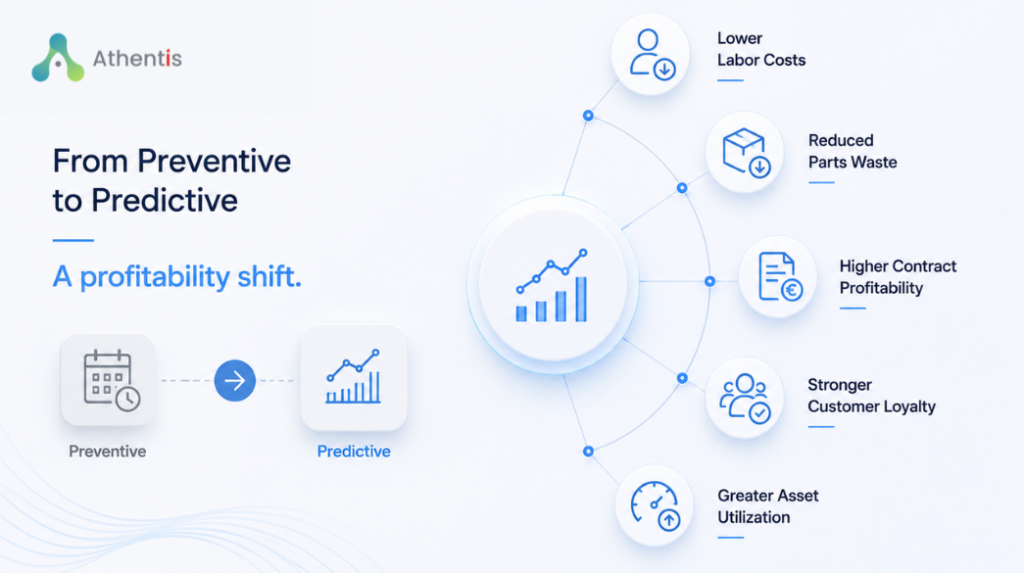
Here are five ways predictive analytics shifts service from cost center to value generator:
- Lower Labor Costs: Emergency callouts and overtime labor are among the most expensive consequences of reactive or over-maintained systems. Predictive analytics helps avoid this by allowing teams to plan ahead, balance workloads, and service only when necessary, cutting unplanned labor costs significantly
- Reduced Parts Waste: Scheduled maintenance often leads to premature part replacements, driving up costs and increasing stock waste. With predictive triggers, parts are replaced based on actual wear, not assumptions, resulting in leaner inventory and fewer wasted resources
- Higher Contract Profitability: When maintenance is aligned with real equipment needs, service teams complete fewer unnecessary tasks and avoid costly disruptions. This increases efficiency per technician and improves margins on each contract, especially for uptime-based agreements
- Stronger Customer Loyalty: Predictive maintenance builds trust. Customers experience fewer breakdowns, better uptime, and more transparency, leading to longer-term relationships, faster renewals, and opportunities for premium service offerings
- Greater Asset Utilization: Predictive service extends equipment lifespan and improves uptime, keeping more assets revenue-ready. This directly impacts profitability by increasing rental hours, production capacity, or service availability across the board
Predictive analytics transforms maintenance from a reactive cost into a proactive advantage. Service providers who embrace this shift not only lower expenses, they unlock new levels of performance, value, and customer trust.
Final Thoughts
Equipment service predictive analytics is no longer a future-facing concept, it’s the present-day edge that separates efficient service providers from the rest. Companies leveraging predictive models are cutting costs, optimizing resources, and creating stronger, more responsive service relationships.
Start evaluating how your current maintenance strategy aligns with your business goals. Shifting from preventive to predictive can reduce emergency labor, streamline inventory, and turn static contracts into high-performing, data-driven partnerships. The sooner you start, the faster your service operation becomes scalable and resilient.
Curious what predictive service could mean for your contracts and fleet? Let’s explore your ROI with Athentis, and unlock smarter, more profitable service management.

