
In most asset-intensive industries, compliance is often seen as a necessary burden. Regulatory frameworks dictate that certain maintenance standards be met, inspections be logged, and safety protocols be followed. For many organizations, compliance management becomes a box-checking exercise: the necessary documentation is gathered, and systems like HxGN EAM ensure that requirements are met.
However, what if compliance data could offer more than just evidence of regulatory adherence? What if EAM systems could help organizations transition from compliance as a legal formality to a strategic advantage?
This shift is more than possible – it’s essential for companies aiming to truly optimize their asset performance and reduce operational risk.
The Traditional Compliance Challenge
For years, compliance has been viewed through a narrow lens. Asset managers, engineers, and compliance officers have had one primary focus: ensure that all equipment meets regulatory standards and that all necessary inspections are logged. These tasks were, and often still are, treated as isolated functions within the broader asset management strategy.
Many organizations rely on manual tracking of compliance data and periodic audits, which often results in:
- Fragmented data: Compliance data is often siloed, making it difficult to access and use alongside operational data.
- Minimal analysis: Compliance reports are typically reviewed after the fact, without using them to forecast future operational trends.
- Reactive approach: Compliance is treated as a defensive task rather than as a proactive, strategic tool.
The result is that while companies meet regulatory requirements, they may be missing out on the greater potential that their EAM systems can offer. Compliance does not have to be the end of the conversation. When leveraged correctly, it can provide valuable insights into asset health, risk mitigation, and long-term sustainability.
Moving Beyond Box-Checking: EAM as a Strategic Tool
To fully harness the potential of compliance data, asset managers must adopt a strategic mindset – one that views EAM systems not just as tools for tracking work orders but as intelligent platforms for making better decisions.
The value of compliance data is often overlooked because it’s viewed in isolation. However, real-time audit readiness, trend analysis, and the integration of compliance data with broader risk management strategies can provide an invaluable resource for long-term operational efficiency and financial performance.
Key Areas to Focus on:
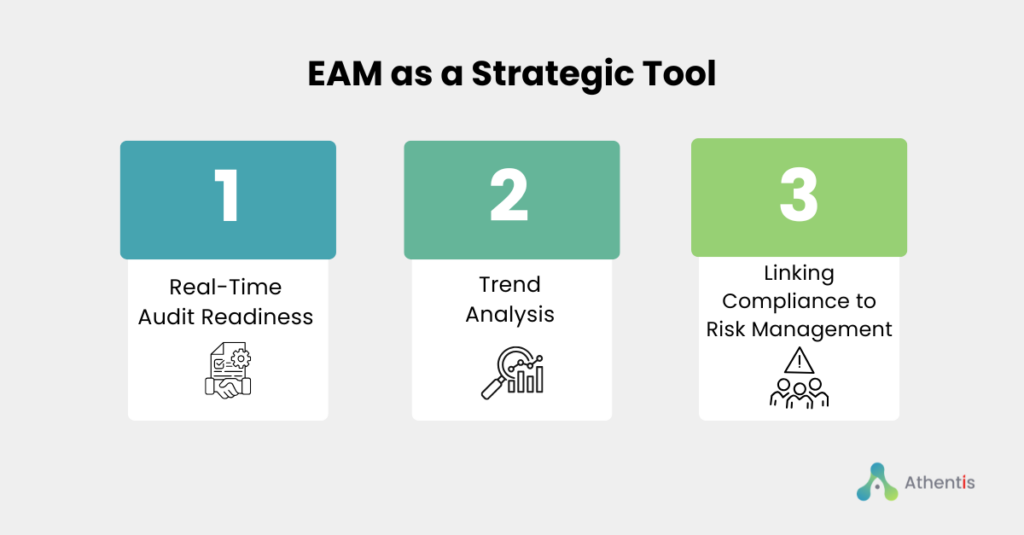
- Real-Time Audit Readiness
Traditionally, audits were seen as a once-a-year event. Organizations would scramble to gather all the necessary compliance documentation, which would often take days or weeks of preparation. With modern EAM systems like HxGN EAM, however, real-time audit readiness is possible.
- Continuous data tracking: Instead of waiting until the next scheduled audit, asset data is constantly updated, ensuring that compliance documentation is always up to date.
- Instant access: In the event of an audit, the necessary information can be pulled up in seconds, reducing time spent on last-minute reconciliations.
- Audit trails: HxGN EAM ensures that every action is traceable, from asset inspections to approvals, making it easier to comply with regulatory standards without disrupting daily operations.
By maintaining an always-ready status for audits, organizations reduce risk, save time, and enhance their credibility in the eyes of regulators and insurers.
- Trend Analysis for Proactive Management
Compliance data can be much more than a list of tasks completed – it holds the potential to reveal patterns and predict future outcomes.
When combined with operational data, compliance data offers a complete view of asset performance over time. For example:
- Trends in asset degradation: Regular compliance inspections tied to asset performance data can reveal degradation patterns in specific equipment, helping managers predict failures before they occur.
- Maintenance schedules and gaps: Analyzing compliance data over time can identify areas where maintenance schedules are either too frequent or too sparse, enabling managers to adjust and optimize schedules.
- Failure frequency: Frequent inspections can highlight recurring issues with specific asset classes or components, allowing organizations to address underlying problems before they escalate into major failures.
Rather than simply fulfilling regulatory requirements, asset managers can now use compliance data to provide meaningful insights into asset health and performance trends.
- Linking Compliance to Risk Management
Compliance should not be siloed from the organization’s broader risk management strategy. In fact, compliance data is a direct reflection of the organization’s operational risks. By connecting compliance efforts with risk management processes, asset managers can better understand and mitigate potential threats.
For example:
- Risk prioritization: Compliance data tied to asset criticality enables organizations to prioritize high-risk assets for inspections, maintenance, or upgrades.
- Regulatory exposure: Tracking compliance data within EAM systems gives organizations the ability to demonstrate risk mitigation efforts when facing regulatory scrutiny, insurance audits, or legal reviews.
- Safety incidents: Compliance data on inspections and safety checks can be analyzed to identify potential safety risks before they turn into incidents.
By integrating compliance with risk management strategies, organizations can be proactive in addressing potential issues before they become costly problems.
The Path Forward: Making Compliance Data Actionable
The shift from box-checking compliance to using EAM systems for strategic insights requires intentional steps:
- Standardize asset data: Ensure that asset classifications, failure codes, and inspection schedules are consistently applied across all sites and facilities.
- Integrate compliance with operational data: Make sure that compliance data is connected to real-time operational metrics, allowing for analysis and trend forecasting.
- Implement automated alerts: Use EAM systems to automatically flag assets that require inspections or are due for regulatory reviews, making compliance a part of the operational workflow.
- Leverage analytics: Use the data stored in HxGN EAM to generate reports that provide actionable insights, from asset performance to regulatory risk exposure.
When organizations start treating compliance as an enabler of broader operational goals, they unlock new opportunities to enhance both performance and compliance, ultimately improving the bottom line.
The Role of Athentis
At Athentis, we help organizations leverage their EAM systems as powerful tools for operational insight and strategic decision-making. Our focus is not only on ensuring compliance but on transforming compliance data into a source of value.
Through governance alignment, data standardization, and advanced analytics, we enable organizations to use their HxGN EAM platform to drive proactive asset management, reduce risk, and increase efficiency.
Final Thoughts
Compliance should no longer be viewed as a task or a burden. When organizations harness their EAM systems to turn compliance data into actionable insights, they open the door to a new level of operational maturity. In 2026, strategic asset management is no longer just about regulatory adherence: it’s about using data to improve performance, mitigate risk, and drive business outcomes.
By transforming compliance into a tool for long-term asset optimization, organizations ensure they remain competitive, compliant, and resilient in an increasingly complex operational environment.

